Garage door seal types vary by shape, retainer, and door fit. A bottom garage door seal closes the gap below the door and helps keep out rain, wind, dirt, and pests. The best garage door seal matches the door and retainer. It should also let the door close safely without rubbing or binding.
A worn seal can leave a garage damp, cold, or dirty. Water may gather along the floor after rain, while small pests may enter through the gap. Replacing the seal can be a simple maintenance task, but some gaps point to a larger door problem.
Table of Contents
- What does a bottom garage door seal do?
- What are the main garage door seal types?
- How do you choose the right bottom seal for your garage door?
- What is a garage door threshold seal and when do you need one?
- How can you replace a garage door bottom seal?
- How do you stop water from getting under a garage door?
- How do you maintain garage door seals throughout the year?
- Frequently Asked Questions
What does a bottom garage door seal do?
A bottom garage door seal fills the space between the door and floor. It helps block rain, wind, dust, leaves, and insects. The seal also softens the door as it closes. It should touch the floor from one side to the other without folding or crushing.
How the seal protects against water, drafts, and pests
The seal makes a flexible barrier along the door’s lower edge. In rainy weather, it helps move water away from the garage opening. It also limits air movement, which can make the garage more comfortable. A sealed opening gives mice, roaches, and other pests fewer easy ways to enter.
A seal cannot fix a sloped floor or poor drainage. Water may still enter when the driveway slopes toward the garage. A threshold seal or drainage change may work better in that case. The door must also sit level when closed.
Signs your existing bottom seal is no longer working
A seal may need replacement when it becomes hard, cracked, torn, or flat. Light under the closed door is another clear warning. The seal may also pull away from the retainer or bunch up at one side.
Common signs include:
- Water or leaves collecting inside after rain.
- A visible gap below part of the closed door.
- Strong drafts around the lower edge.
- Dirt marks passing beneath the door.
- The seal dragging, folding, or coming loose.
Murray Garage Door Repair can help Murray homeowners tell the difference between a worn seal and a door that needs adjustment. A damaged bottom seal is often easy to spot. A door that sits unevenly may need a closer look before a new seal is fitted.
What are the main garage door seal types?
The main garage door seal types include U-shaped, T-style, beaded, and bulb designs. Each design fits a certain retainer or channel on the door. The shape matters because a seal that does not match may slide out or leave gaps.
U-shaped and T-style bottom seals
A U-shaped seal wraps around the lower edge or slides into a matching holder. It is common on doors with a special bottom retainer. The retainer keeps the rubber or vinyl seal in place as the door moves.
A T-style seal has narrow tracks called T-ends. These ends slide into matching channels. The channel size and spacing must match the new seal. A T-style seal may look right but still fail if its tracks are too wide or too narrow.
Beaded, bulb, and retainer-specific seal designs
Beaded seals use round edges that fit into a special retainer. Bulb seals have a rounded lower part that presses against the floor. Some doors use a retainer made for one seal profile. The door material, retainer shape, and floor gap all affect the choice.
Seal materials also differ. Rubber often stays flexible through changing weather. Vinyl is common and may feel lighter or stiffer. Check the current seal and retainer before ordering a replacement.
The phrase garage door weather stripping side and top means seals placed around the door frame. These strips help close gaps along the edges. They work with, not instead of, the bottom seal.
How do you choose the right bottom seal for your garage door?
The right bottom seal matches the door width, retainer, channel, and floor gap. Measuring before buying can prevent a failed replacement. The seal should cover the opening, fit the holder, and touch the floor lightly when the door closes.
Measuring the door, retainer, and seal channel
First, inspect the bottom edge with the door fully closed. Keep fingers away from moving hinges, rollers, and cables. If the old seal comes out easily, take a short piece with you when comparing new profiles.
Measure the full door width from side to side. Then measure the retainer opening and channel spacing. A tape measure or ruler can help. The new seal should cover the full width without leaving a gap at either end.
The garage floor also matters. A smooth floor needs less seal pressure than an uneven floor. If the floor rises or dips, a threshold may help create more even contact. A very large gap may point to door alignment or floor trouble instead of a seal problem.
Matching the seal to the door material and garage conditions
Steel, wood, and insulated garage doors may use different retainers. The door’s age and design can also affect the right profile. Product details should list the retainer style and channel size, not only the seal length.
Think about the garage conditions too. A damp garage may need a seal that stays flexible. A garage in strong sun may need material made for repeated heat and weather changes. If the profile is unclear, a garage door repair professional can inspect the lower edge before parts are ordered.
Murray Garage Door Repair serves property owners in the main Murray area, including Five Points, Penny, Hazel, Hardin, Puryear, Benton, and nearby communities. The team can help with seal choice, alignment, and related garage door maintenance. Choosing the right part first can prevent extra work and help the door close evenly.
What is a garage door threshold seal and when do you need one?
A garage door threshold seal is a raised strip fixed to the floor below the closed door. It makes a small barrier against water moving across the floor. A threshold can help when rain reaches the opening or the floor is slightly uneven.
How thresholds stop water beneath the closed door
The threshold sits inside the garage opening where the door meets the floor. Its sloped shape helps direct water away from the room. The closed door presses against the raised section, making a tighter barrier than the bottom seal may provide alone.
A threshold should not stop the door from closing. It must sit where the door touches it evenly across the opening. Clean and dry the floor before installing it. Follow the product directions for adhesive and placement.
A threshold cannot repair a damaged slab or stop water through side walls. It also cannot fix a door that is off track or badly out of line. Those problems need separate repairs.
Combining a threshold with a bottom seal
A threshold and bottom seal often work well together. The bottom seal closes the moving gap under the door. The threshold gives the seal a firm, raised surface to meet. This setup may help when the driveway sends water toward the garage.
The two parts must not create too much resistance. If the opener strains, the door reverses, or the lower edge bends, the setup may be too high or poorly placed. Stop using the door until the cause is checked.
For homes in Murray, local weather and floor shape can affect the best choice. Murray Garage Door Repair can inspect the opening and explain whether you need a new seal, threshold, drainage change, or other repair.
How can you replace a garage door bottom seal?
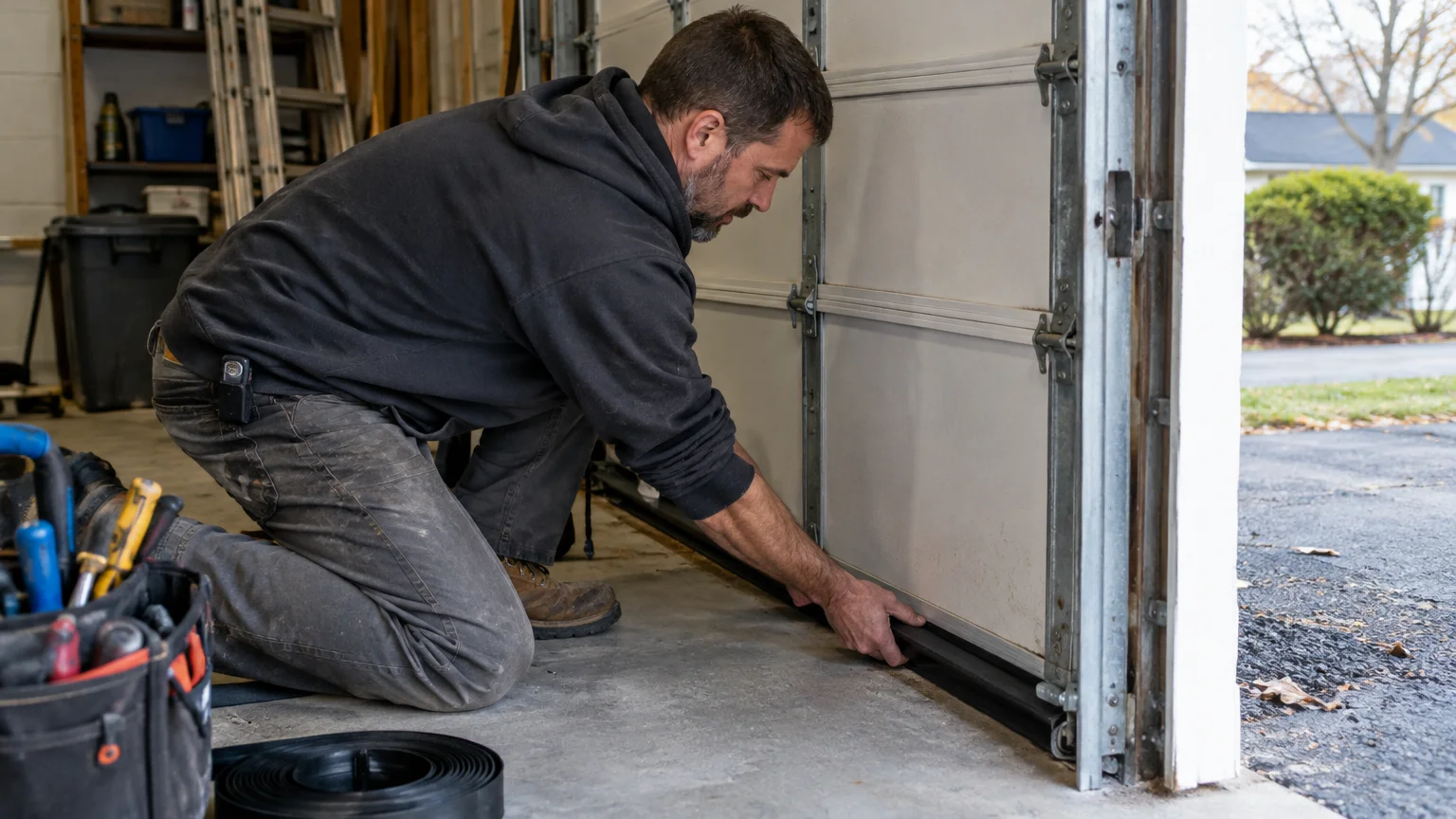
A bottom-seal replacement starts by finding the retainer and securing the door. Remove the old seal, clean the channel, and fit the new seal without stretching it. Anyone unsure around springs, cables, or a heavy door should stop and arrange professional help.
Tools and preparation for a bottom-seal replacement
Basic supplies may include a tape measure, gloves, a screwdriver, mild cleaner, and a replacement seal. Some retainers need a lubricant approved for the seal material. Disconnect the door only when the instructions allow it and when you understand how to secure it.
Do not use the opener while your hands are near the lower edge. Keep children, pets, and vehicles away from the work area. Never remove spring parts or loosen cables to make the job easier. A garage door spring can store dangerous force, so garage door safety must come first.
A safe step-by-step replacement process
- Close the door and identify the bottom retainer and seal profile.
- Secure the door so it cannot move during the work.
- Remove the old seal without bending or harming the retainer.
- Clean dirt from the retainer and check for cracks or loose parts.
- Cut the new seal to the measured door width, if needed.
- Slide or press the seal into place without stretching it.
- Close the door and check for even contact with the floor.
- Test the door by hand, then use the opener from a safe distance.
The door should move smoothly and stay level. If it binds, rises unevenly, reverses, or leaves a gap, the seal may not be the only problem. Garage Door Off Track Repair, Garage Door Opener Repair, or another garage door repair may be needed.
How do you stop water from getting under a garage door?
Stopping water takes more than changing the bottom seal. Check the seal, threshold, floor slope, door alignment, and outside drainage. Water that keeps entering may come from the driveway or walls instead of the gap under the door.
Checking the floor, threshold, door alignment, and drainage
Start by watching where water travels during rain. Look for low spots near the opening and cracks in the concrete. Leaves and dirt can also block small drainage paths and send water toward the garage.
Next, check the closed door from inside. The bottom seal should touch the floor across its width. One raised corner may show an alignment problem. A threshold may help with a small floor gap, but it should not hide a serious door fault.
Check the side and top weatherstripping too. Gaps along the frame can let wind-driven rain enter even when the bottom seal works well. The seal should stay attached and should not press so tightly that the door rubs.
When weatherstripping or professional garage door repairs are needed
Weatherstripping may solve small gaps around the frame. A new bottom seal may solve a brittle or torn lower barrier. Professional service is better when the door is crooked, off track, very heavy, noisy, or unsafe to move.
A dead opener may leave the door stuck, but opener repair does not replace a worn seal. Garage door opening repair may involve the opener, tracks, rollers, springs, or cables. A trained technician can find the part that needs attention instead of treating only the visible gap.
People searching for garage door repair services near me often need quick help with access or security. Local service can help when a door will not close, will not open, or has moved off its track. Murray Garage Door Repair helps Murray property owners decide when a seal project is simple maintenance and when urgent repair is safer.
How do you maintain garage door seals throughout the year?
Garage door seals last longer when they stay clean, flexible, and seated. A quick check during routine garage door maintenance can find cracks or gaps early. Check the seal after severe weather and whenever the door begins to move differently.
Cleaning, inspecting, and testing the seal
Wipe the seal with mild soap and water. Remove grit from the retainer and nearby floor. Avoid harsh chemicals that may dry or harm the seal. Let the area dry before checking for cracks, tears, or loose sections.
Close the door and look for daylight below it. Test the seal at several points with a thin piece of paper. It should meet the floor without being crushed. Also check the side and top weatherstripping for gaps or parts that have pulled away.
Keep the floor near the opening clear. Tools, boxes, and debris can press against the seal or block the door. A clean area makes it easier to notice water, pests, or unusual wear.
When to replace the seal or call a garage door repair professional
Replace the seal when it is brittle, split, badly flat, or too short for the opening. A new seal may also help when water and drafts continue after cleaning. The replacement must match the retainer and door design.
Call a professional when the door is heavy, crooked, off track, or unsafe to test. Spring and cable problems should not become a seal project. Anyone asking who services garage doors near me should choose a local provider that can inspect the whole door system, not only sell a replacement strip.
Key takeaways
- A bottom seal closes the gap under a garage door.
- Garage door seal types must match the retainer and channel.
- A threshold can help when water flows across the garage floor.
- A worn seal is different from an uneven or unsafe door.
- Professional help is best for springs, cables, tracks, and heavy doors.
Conclusion
A bottom seal is a small part with an important job. It helps protect the garage from water, drafts, dirt, and pests. The best replacement matches the current retainer and touches the floor evenly. A threshold may add protection when water moves toward the opening.
Murray Garage Door Repair can help property owners review seal wear, threshold needs, and related door problems. Contact us today if the door will not close, will not open, or no longer moves safely.
Frequently Asked Questions
How long does a garage door bottom seal usually last?
Service life depends on sun, weather, traffic, floor contact, and material. A seal may wear faster in a damp or hot garage. Regular checks can find cracks, hardening, flattening, and gaps before water or pests become a larger problem.
Can a homeowner replace a garage door seal?
Many homeowners can replace a simple bottom seal when the retainer is sound and the door is secure. The work should not involve springs, cables, or track parts. If the door is heavy, crooked, or unsafe, a garage door repair professional should inspect it.
Why does water still enter after a new seal is installed?
Water may come from an uneven floor, driveway slope, side gap, or damaged weatherstripping. A threshold may help when water flows across the floor. If the door does not sit level, check the alignment problem before adding more seal material.
Are all garage door bottom seals interchangeable?
No. Garage door seal types use different shapes, retainers, channels, and sizes. A T-style seal may not fit a U-shaped retainer, and a bulb seal may need a matching holder. Measuring the current parts and door width helps prevent a wrong purchase.
When should someone call for garage door repair?
Professional help is right when the door is off track, very heavy, crooked, stuck, or making odd sounds. Opener, spring, cable, and track problems can create safety risks. A technician can tell whether the seal is the real problem or only a sign of another fault.
If you are not sure what you are dealing with, it is worth having someone look at it before it turns into a bigger job. Get in touch with Murray Garage Door Repair today and we will tell you where you stand.